
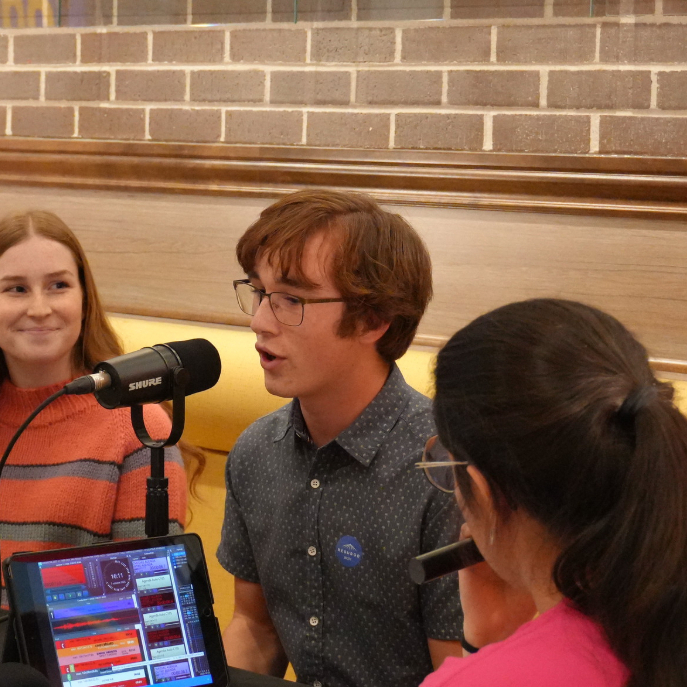
In October 2026, Rooted Carbon was featured in an on-air interview with CMédias, bringing its approach to environmental technology to Francophone audiences across Atlantic Canada.
The conversation explored a deceptively simple question: what can a photograph tell us about a tree?
Beyond what we can see
A tree’s ecological value extends well beyond what we can see. Its species, height, structure, biomass, and stored carbon all contribute to its role in the surrounding environment. Yet collecting this information traditionally requires time, field measurements, specialized knowledge, and, often, expensive equipment.
Rooted Carbon is working to make that process more accessible.
Image analysis grounded in forestry science
During the interview, the team discussed how ordinary smartphone photographs and drone imagery can become the starting point for structured ecological information. The platform combines image analysis, available photographic metadata, and established forestry models to generate tree-level estimates.
Importantly, this is not simply a matter of asking artificial intelligence to identify a tree. Behind each result is a scientific process involving image characteristics, spatial information, and forestry equations used to estimate quantities such as biomass and carbon storage.
Bringing local technology into public conversation
The discussion also highlighted a broader vision for the technology. Carbon is only one part of a tree’s ecological importance. Making information about forest structure, species, and environmental characteristics more accessible can support education, conservation, and better-informed land management.
Being featured by CMédias provided an opportunity to explain this work beyond the technical and scientific communities, particularly within the Francophone communities of the Maritimes.
For Rooted Carbon, the interview represented another step in bringing a locally developed environmental technology into wider public conversation.